ENACT expands global partnerships and launches new investment initiative with Denmark to accelerate nature-based climate action
17 November 2026
17 November 2026, Antalya, Türkiye – The ENACT Partnership is expanding its global reach with five new country partners and a major investment initiative aimed at accelerating the implementation of Nature-based Solutions (NbS) for climate adaptation and resilience.
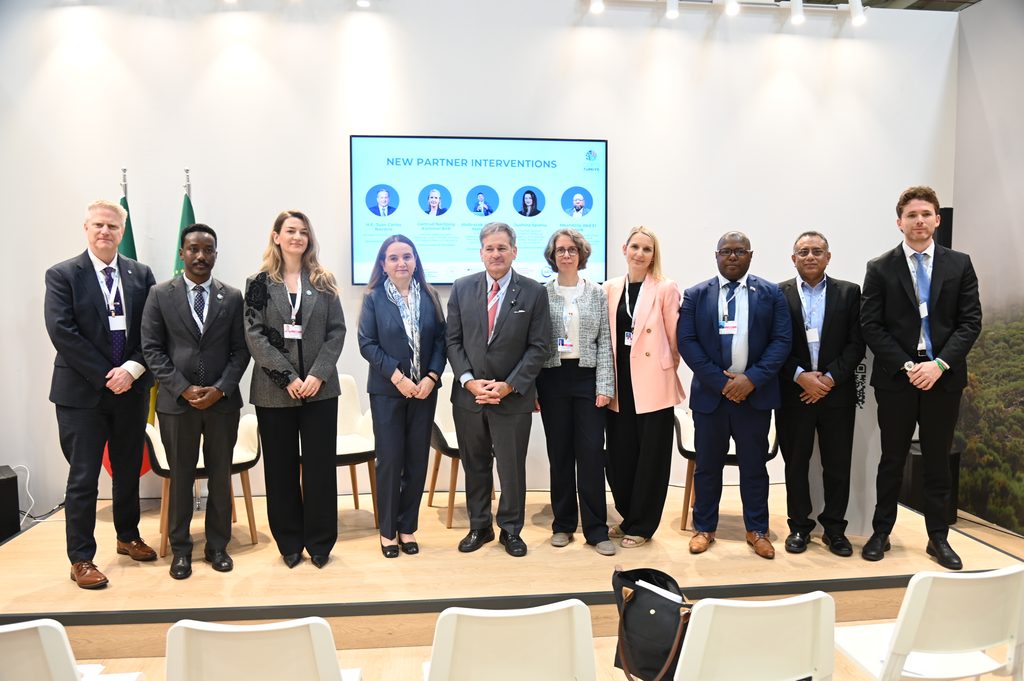
The announcements were made at a high-level event at the Ethiopia Pavilion during the 31st Conference of the Parties to the United Nations Framework Convention on Climate Change (UNFCCC COP31), bringing together government representatives, ENACT partners and international stakeholders to explore how stronger partnerships, policy coherence and investment can translate global commitments into action.
With five new countries joining the Partnership, ENACT is strengthening its engagement with national governments to advance NbS through improved policy and institutional frameworks, increased access to finance, capacity development and targeted technical assistance. The event also marked the launch of the new Nature4Resilience (N4R) investment initiative, supported by Denmark, which will accelerate investment in nature-based climate adaptation in East Africa.
New country partners strengthen ENACT’s global reach
The new ENACT partners – Albania, Comoros, Denmark, Panama and Somalia – will work with the Partnership to advance NbS for climate transformation, supporting national priorities while contributing to commitments under the three Rio Conventions on climate change, biodiversity and land degradation.
Their engagement will help strengthen national enabling environments for NbS, mobilise public and private finance, and build the institutional and technical capacity needed to move from policy ambition to implementation.

The new partners bring diverse national experiences and priorities to the Partnership. In Albania, the National Agency of Protected Areas sees ENACT as an opportunity to better connect the country’s climate and biodiversity commitments and translate them into practical action. Its priorities include strengthening protected area management, restoring degraded habitats, improving ecological connectivity and promoting integrated ecosystem management. The Agency also highlighted the importance of scientific knowledge, monitoring and cooperation with local communities in delivering effective NbS.

For Comoros, joining ENACT builds on national experience with the ReSea project – Regenerative Seascapes for People, Climate and Nature – funded by Global Affairs Canada and implemented by IUCN and Mission Inclusion. In the Mohéli seascape, the project supports the conservation, protection and restoration of coral reefs, mangroves and seagrass beds. These ecosystems are vital not only for biodiversity, but also for coastal protection, fisheries, livelihoods, food security and the resilience of coastal communities. Comoros sees ENACT as a strategic platform to strengthen technical and institutional capacities, share knowledge and mobilise financing to scale up such initiatives.

Somalia joins ENACT as it advances national priorities for ecosystem restoration and sustainable natural resource management. Its National Biodiversity Strategy and Action Plan 2026–2030 prioritises restoring degraded rangelands, forests and coastal ecosystems, including mangroves, alongside stronger community participation. These priorities are reinforced by the country’s NDC 3.0 and its recently launched NDC Investment Plan, which identify opportunities for ecosystem restoration, sustainable grazing management and coastal protection. Somalia highlighted the importance of international cooperation to strengthen the implementation of NbS and build national capacity to mobilise climate finance.

Denmark launches Nature4Resilience initiative
A key milestone at COP31 was the launch of Nature4Resilience (N4R): Nature-based Solutions for Climate Resilience Investment, a new initiative funded by the Ministry of Foreign Affairs of Denmark (Danida) and implemented through the ENACT Partnership and IUCN.
Running from 2025 to 2030, the initiative will support Ethiopia, Kenya and Uganda in accelerating the adoption and implementation of NbS for climate adaptation, placing nature at the heart of resilient and inclusive development. With a budget of DKK 50 million (equivalent to around USD 7.4 million), N4R will focus on strengthening implementation capacities as well as climate finance for NbS, translating national commitments into implementable investment plans and integrating ecosystem-based adaptation (EbA) into programmes where ecosystem resilience and biodiversity protection are key for its success.
The initiative’s technical work will be underpinned by IUCN’s Operational Framework for integrated, inclusive, and community-led action: Nature-based Solutions for adaptation and resilience in practice, launched yesterday at COP31. The framework provides guidance for designing and implementing NbS for adaptation and resilience, linking ecosystem dependencies, climate risks and socially equitable responses.
N4R will strengthen institutional coordination, technical capacity and knowledge-sharing, equipping governments and stakeholders to implement high-quality NbS for adaptation. Through this approach, the initiative aims to advance adaptation outcomes aligned with the Paris Agreement, the Kunming-Montreal Global Biodiversity Framework and the Sustainable Development Goals.
Speaking at the launch, Gertrud Nørbjerg Kümmel Birk, Deputy Head of Green Diplomacy and Climate at the Ministry of Foreign Affairs of Denmark, highlighted that “Nature4Resilience is an important vehicle for accelerating the implementation of Nature-based Solutions for climate adaptation and ecosystem resilience. By supporting Ethiopia, Kenya and Uganda to develop investment plans and mobilise both public and private finance, the initiative aims to turn commitments into concrete action. While this is an ambitious undertaking, we hope that the experience and lessons generated will inspire similar efforts well beyond the participating countries.”
Building momentum towards COP32
By bringing together new country partnerships, investment opportunities and practical approaches to policy implementation, ENACT is working to strengthen the enabling conditions for NbS to deliver lasting benefits for people, nature and climate.
The launch of the ENACT 2026 State of Nature-based Solutions Report, a new global assessment by the ENACT Partnership examining how NbS are being incorporated into national policy frameworks, also took place during this event.
The announcements at COP31 represent an important step in building momentum towards COP32, reinforcing the need for taking stock of progress, stronger international cooperation and sustained investment to turn commitments under the Rio Conventions into measurable action.